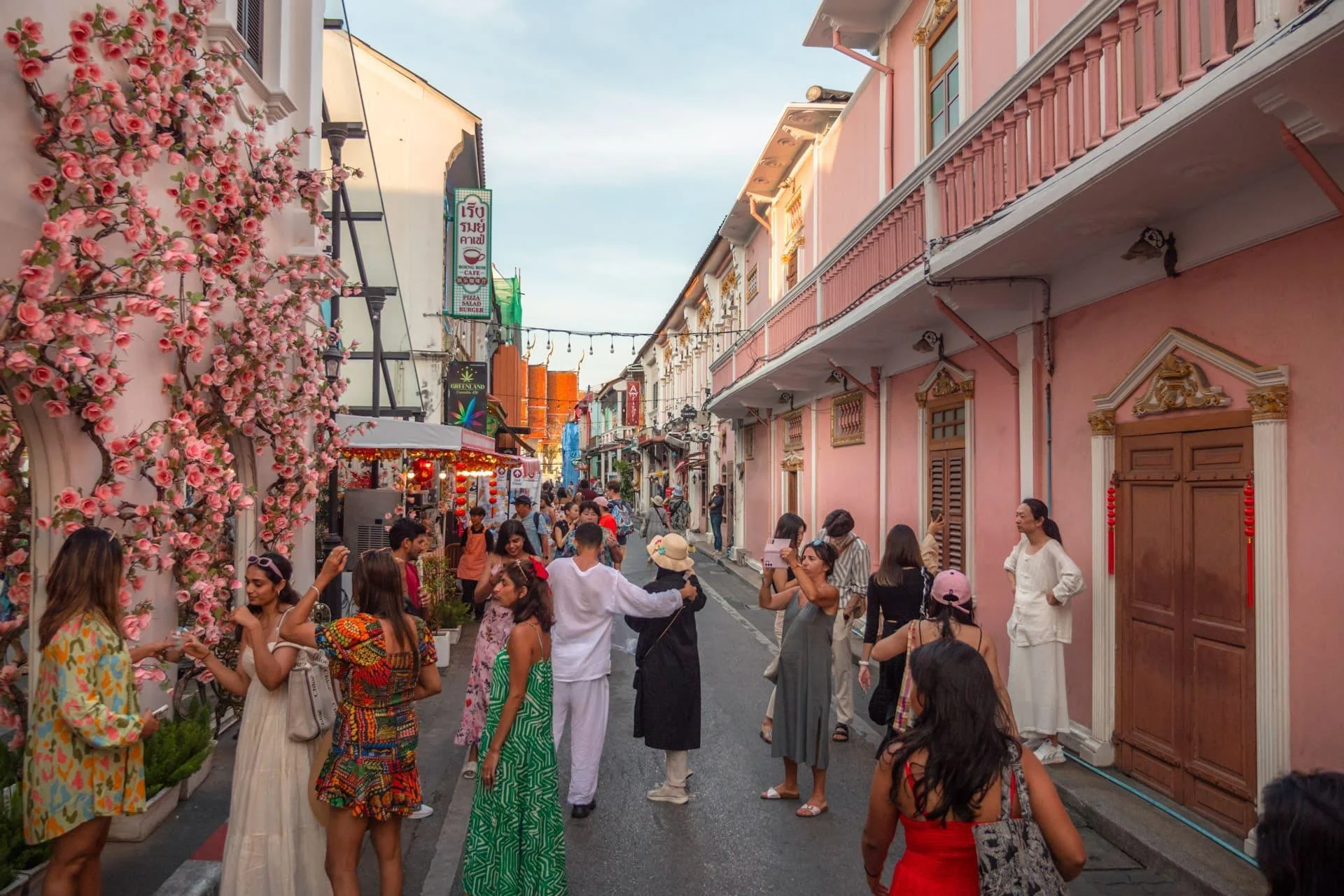
Stepping into Old Phuket Town feels like stepping back in time. Far from the typical beach clubs and neon-lit strips of the coast, this historic center is a vibrant grid of pastel-colored Sino-Portuguese shophouses, ornate shrines, hidden coffee shops, and world-class regional cuisine.
Whether you are planning a day trip from Patong or looking for deep cultural immersion, here is your complete blueprint to experiencing Old Phuket Town.
How to Reach Old Phuket Town
By Taxi / Grab / Bolt (Fastest & Most Convenient):
- Distance/Time: ~15 km | 15 to 20 minutes.
- Cost: 400 to 500 THB ($11–$14 USD).
- Tip: Use the Grab or Bolt apps for fixed, transparent pricing so you don’t have to bargain with street-side drivers.
By Local Bus / Blue Songthaew (Cheapest):
- Details: Catch the traditional open-air blue wooden bus from the Patong Bus Station (near the beachfront).
- Cost: Around 50 THB.
- Time: ~50 to 55 minutes (runs roughly every 30 minutes during daytime hours).
What to See & Do
1. Wander Thalang Road & Soi Romanee:
Thalang Road is the heartbeat of the old town. Branching off it is Soi Romanee—a narrow, incredibly photogenic lane once known as the town’s red-light district, now lined with bougainvillea-draped pastel buildings and quaint cafés.
Thalang Road serves as the main artery of the historical quarter. Lined on both sides by continuous rows of two-to-three-story Sino-Portuguese shophouses, the street is celebrated for its unique architectural style, which blends traditional Chinese merchant layouts with European colonial arches and stucco details. Originally built during the late 19th and early 20th centuries during Phuket’s tin-mining boom, these buildings feature the characteristic “five-foot ways” (ang-ki-t’ng)—deep covered pedestrian arcades designed to protect shoppers and pedestrians from both torrential tropical downpours and blazing equatorial sun.
Today, Thalang Road has transformed into a thriving cultural hub. Unlike modern concrete malls, walking down Thalang Road is an immersive sensory experience. The air carries the scent of freshly roasted coffee, herbal spices from old apothecary shops, and local baked treats. During the day, you can browse independent art galleries, boutique textile shops selling Peranakan kebaya, vintage curio stores, and family-run businesses that have operated here for generations.

Soi Romanee: From Red-Light Past to Pastel Paradise
Branching directly off Thalang Road is Soi Romanee, arguably the most photographed lane in all of Thailand. However, beneath its gorgeous aesthetic of bright pastel shutters, lush green bougainvillea vines spilling over balconies, and quaint artisan cafés, lies a fascinating and colorful history.
Over a century ago, during Phuket’s rough-and-tumble tin-mining era, Soi Romanee was an entirely different world. It served as the town’s notorious red-light district, gambling den zone, and opium house quarter. Back then, the narrow lane was crowded with brothels, packed bars, and transient workers looking for escape.
Decades later, the municipal government and local heritage conservationists undertook massive restoration efforts, cleaning up the alleyway and breathing new life into its historic shell. The once-infamous gambling dens and houses of ill repute were meticulously transformed into chic boutique guesthouses, artisan ice cream parlors, craft shops, and quiet espresso bars.

Experiencing the Magic Today
Walking down Soi Romanee today feels like stepping onto a Hollywood movie set. The gentle curve of the alleyway ensures that every step reveals a new photo angle, with the contrasting pastel pinks, yellows, and mint-green shophouses standing out brilliantly against the tropical blue sky.
- Best Time to Visit: To capture the best photographs without crowds, head to Soi Romanee early in the morning (around 8:00 AM to 9:00 AM) before the midday tour buses arrive.
- Where to Stop: Drop into one of the stylish local cafés for a cold brew, or sit on an outdoor bench under the cascading bougainvillea to watch the world go by at a wonderfully unhurried pace.
2. Hunt for Street Art:
Phuket Town is an open-air art gallery. Keep your camera ready for giant murals painted by renowned Thai and international street artists celebrating local Peranakan culture.
Old Phuket Town’s striking visual identity is not a recent aesthetic choice; it is the direct legacy of the 19th-century global tin-mining boom. During this era, Phuket grew into one of the world’s most lucrative producers of tin. This immense wealth attracted an influx of ambitious Hokkien Chinese merchants, European mining executives, and Malay traders.
As these wealthy traders built their homes and storefronts, they blended architectural traditions. The result is the iconic Sino-Portuguese (or Baba-Yonya) architectural style:
- The Facades: European colonial design elements—such as arched shuttered windows, neoclassical columns, detailed plaster moldings, and grand French-style double doors—dominate the exterior views.
- The Interiors: Behind those European facades, the deep layouts follow traditional Chinese long-house design principles, featuring inner courtyards (tian-liang) designed to let tropical light and natural ventilation flow through the multi-story buildings.

The Five-Foot Ways (Ang-ki-t’ng): Built uniformly across frontages, these covered pedestrian corridors allowed merchants and shoppers to walk protected from the harsh equatorial sun and heavy monsoon rains.
The Peranakan (Baba-Yaya) Culture
The blending of Hokkien Chinese men who married local Thai women gave birth to a distinct sub-ethnic culture known locally as the Baba-Yaya or Peranakan community. This culture is deeply visible across Old Phuket Town today, expressed through:
- Unique Cuisine: A fusion of Chinese cooking techniques with fiery Thai spices and Malay herbs (such as slow-braised pork belly moo hong and rich prawn gung pad prik, distinct from standard Central Thai dishes).
- Traditional Attire: The Nonya Kebaya, an intricately hand-embroidered translucent blouse paired with patterned batik sarongs, still showcased in boutique textile windows along Thalang Road.
- Distinct Architecture: Grand family manors like Baan Chinpracha or Chinpracha House, showcasing imported Italian floor tiles, English-cast iron pillars, and hand-carved Chinese rosewood furniture.

Hidden Shrines and Spiritual Life
Beyond the busy café strips and commercial shophouses, Old Phuket Town is a deeply spiritual community anchored by hidden Taoist and Chinese temples:
- Shrine of the Serene Light (Taku Thung Shrine): Tucked discreetly down a narrow alleyway off Phang Nga Road, this 20th-century Taoist shrine features magnificent carved stone dragons, gold-leaf altars, and soot-stained walls covered in historical Chinese murals. It offers a serene, quiet escape from the busy streets outside.
- Jui Tui Shrine: Located slightly toward the edge of the historic core, this major shrine is the epicenter of Phuket’s famous annual Vegetarian Festival, dedicated to the protector god Tian Hou. Its bright red pillars and burning coils of incense offer a window into active local devotion.
3. Explore Phuket Thai Hua Museum:
Housed in a gorgeous colonial-era building on Krabi Road, the Phuket Thai Hua Museum stands as a vital cultural landmark that vividly details the rich history of the Hokkien Chinese immigrants. Long before it became a popular exhibition space, the structure originally served as the island’s first Chinese-language school, established to educate the children of local families and preserve their native traditions.
Inside, the museum features multiple galleries that chronicle the arduous journeys, daily lives, and cultural integration of early settlers who arrived to work in the lucrative tin-mining industry. This booming trade ultimately fueled the town’s rapid economic growth and shaped its distinct Sino-Portuguese architecture. Visitors can explore fascinating displays showcasing traditional attire, historical photographs, artifacts, and interactive exhibits that highlight the deep-rooted Peranakan heritage defining modern Phuket.

4. Step Back in Time at Baan Chinpracha:
Step back in time with a visit to Baan Chinpracha, a majestic, privately-owned 20th-century Peranakan mansion that offers an authentic window into Phuket’s opulent past. Built in 1903 by the wealthy Tan-Luanwongse family during the island’s booming tin-mining era, this architectural masterpiece remains wonderfully preserved and continues to be inhabited by descendants of the original owners.
As you wander through the grand rooms, you will be surrounded by stunning original features, including imported Italian floor tiles, intricate European period furniture, beautiful teakwood carvings, and priceless family heirlooms that have survived for generations. The residence is a prime example of classic Sino-Portuguese architecture, showcasing a central open-air courtyard that allows natural light and tropical breezes to flow through the living spaces. Stepping across its threshold feels less like visiting a standard museum and more like being invited into the private, luxurious home of a 20th-century Straits Chinese tycoon.

5. Visit Taoist Shrines:
Immerse yourself in the vibrant cultural heart of the island by exploring Phuket’s historic Taoist shrines. Dropping by prominent sacred sites like the Jui Tui Shrine or the Bang Neow Shrine offers a mesmerizing window into the island’s deeply rooted spiritual life, heavily influenced by its Hokkien Chinese heritage.
As you step inside, you are immediately greeted by bustling, incense-filled courtyards where the air is thick with fragrant smoke and the quiet murmur of devotees offering prayers. The shrines themselves are visual masterpieces, featuring striking red-and-gold architecture adorned with intricate carvings of dragons, mythical beasts, and vibrant deities. Whether you are watching locals perform traditional rituals, observing the crackle of firecrackers during festival seasons, or simply admiring the ornate detailing, these spiritual hubs provide a profound connection to Phuket’s rich multicultural tapestry.

Best Places to Take Photos
- Soi Romanee: The ultimate Instagram spot with its curved lane, vibrant shutters, and hanging tropical plants.
- The Memory at On On Hotel: A historic Sino-Portuguese hotel featured in the Leonardo DiCaprio movie The Beach. Its pristine white-and-arch colonial exterior is iconic.
- The Chartered Bank Intersection: Featuring the historic Standard Chartered Bank clock tower building—a prime example of grand colonial-meets-Chinese architecture.
- Any Colorful Shophouse Arcade: Walk under the five-foot pedestrian arches (ang-ki-t’ng) on Thalang or Dibuk Road for a classic framed shot.

What to Buy (Shopping)
Old Phuket Town is fantastic for picking up unique, high-quality souvenirs rather than mass-produced beach trinkets:
- Peranakan Kebaya & Traditional Textiles: Intricately embroidered fabrics and colorful local garments.
- Local Coffee & Teas: Specialty beans sourced from southern Thailand.
- Antiques & Quirky Souvenirs: Independent boutiques along Thalang Road sell vintage tin-mining memorabilia, hand-painted ceramics, and retro posters.
- Local Snacks & Tau Sor: Pick up boxes of Tau Sor (sweet or savory baked bean paste pastries) or local cashew nut snacks to take back home.

What to Eat (Food & Cafés)
Old Phuket Town is a UNESCO Creative City of Gastronomy. Do not leave without trying these iconic dishes and spots:
- Mee Hokkien: Thick yellow stir-fried noodles with pork, seafood, and rich gravy. (Try it at Lock Tien Local Food or Lock Tien food court).
- Moo Hong: Slow-braised pork belly flavored with garlic, pepper, and sweet soy sauce until it melts in your mouth. (Best eaten at Raya Restaurant or One Chun).
- O-Aew: Phuket’s signature refreshing dessert made of banana-flour jelly, shaved ice, red beans, and sweet syrup. (Head to Torry’s Ice Cream on Soi Romanee).
- Dim Sum Breakfast: Experience local morning culture with fresh steamed dim sum at Boonrat Dimsum on Bangkok Road.
- Cafe Hopping: Cool down from the midday tropical heat at aesthetic spots like Bookhemian (bookshop café), GRAPH Phuket, or Coolies Club.

Pro-Tip: Time your visit for a Sunday afternoon to experience Lard Yai (The Sunday Walking Street Market) on Thalang Road. The street closes to traffic from 4:00 PM to 10:00 PM, exploding into a massive, vibrant street-food and handicraft festival.
Hotels Close By
If you want to spend a night or two soaking up the heritage atmosphere, consider these top-rated accommodations:
- Luxury / Boutique Heritage: The Memory at On On Hotel (historic charm meets modern luxury) or Casa Blanca Boutique Hotel.
- Mid-Range Comfort: Novotel Phuket City Phokeethra (great modern amenities right on the edge of the old town) or The Malika Hotel.
- Budget / Backpackers: Blue Monkey Phuket or various cozy local guesthouses tucked into the side streets.
After Dark: Lard Yai, Bars, Clubs & Nightlife Realities
When the sun sets and the heritage shophouses light up under lanterns, Old Phuket Town transitions from a sleepy historical enclave into a culturally rich and atmospheric evening destination. Unlike the wild, hedonistic beach strips of the island, Phuket Town offers a distinctively local, artistic, and relaxed night scene.
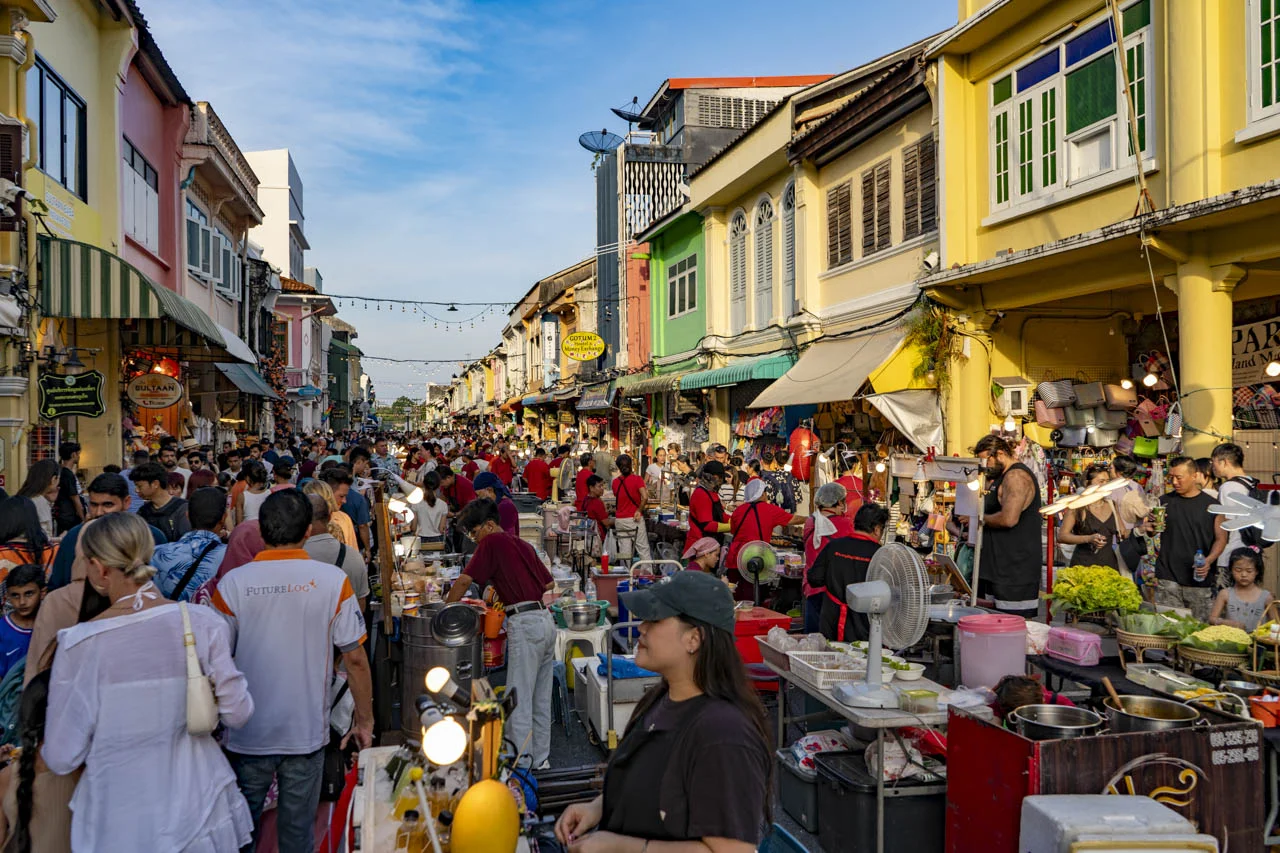
The Sunday Phenomenon: Lard Yai Market
If you are in town on a weekend, the absolute centerpiece of the local evening scene is Lard Yai (The Phuket Sunday Walking Street Market) on Thalang Road. Running every Sunday from roughly 4:00 PM to 10:00 PM, this pedestrian-only festival fills the historic center with vibrant crowds, artisan crafts, live acoustic music, and the incredible smells of southern Thai street food. It is a family-friendly cultural celebration where locals, expats, and travelers mix seamlessly under the glow of colonial-era architecture.
Old Town Bars & Live Music Scene
Away from the market streets, Phuket Town boasts a thriving, indie-spirited nightlife scene centered around chic cocktail dens and live music bars rather than mega-clubs:
- Music Love & Blues: Venues like Rockin’ Angels Blues Cafe and Music Matter Jazz Club draw passionate crowds looking for authentic live bands, jam sessions, and a friendly, unpretentious community vibe.
- Cocktail Lounges: Trendy spots like The Library Phuket or hidden speakeasies offer sophisticated mixology menus in atmospheric, design-forward settings.
Clubs, Go-Go Bars & Adult Entertainment: What to Expect
A common question for first-time visitors is whether Old Phuket Town features adult entertainment, go-go bars, or high-energy nightclubs like Patong Beach.
- Zero Go-Go Bars in the Old Town: Old Phuket Town is a preserved cultural, residential, and historical heritage zone. There are no go-go bars, red-light districts, or adult entertainment venues within the historic colonial grid. The local municipality strictly preserves the area’s family-friendly, traditional identity.
- Where to Find Clubs and Go-Go Bars: If you are searching for high-octane nightlife, go-go bars (such as those along Bangla Road in Patong like Suzy Wong’s or Harem), or large commercial nightclubs, you will need to travel out of the Old Town back toward Patong Beach or the main entertainment hubs.
- Working Girls & Local Nightclubs: While Phuket Town does have a few local Thai pubs, discotheques, and late-night spots patronized by residents (such as areas near Limelight Avenue or select karaoke lounges), you will not encounter the overt commercial “working girl” scene or freelance hostess bars typical of Patong’s tourist strips. The nightlife here centers strictly around good music, creative drinks, and conversations with locals and expats.
Scams & Alerts: Staying Safe
Old Phuket Town is generally very safe, laid-back, and welcoming, but keep these practical alerts in mind:
- Cash is King: While trendy cafés accept cards, most street food vendors, small markets, and historical ticket counters operate strictly on Thai Baht cash. Carry small notes (20, 50, and 100 THB).
- Midday Heat Exhaustion: Walking the open streets under the direct tropical sun past 11:00 AM can be intense. Do your heavy walking early in the morning or late afternoon, and stay hydrated.
- Scooter Traffic on Narrow Sidewalks: The historic five-foot pedestrian walkways are great, but some sections are blocked by parked motorbikes or steps, forcing you briefly onto narrow streets. Watch out for passing traffic.
- Tuk-Tuk / Taxi Overcharging: If hailing a ride off the street in town instead of using Grab/Bolt, always negotiate and agree on the exact fare before getting into the vehicle to avoid unexpected price spikes upon arrival.
- Dress Code at Shrines: Temples and Taoist shrines require modest attire (shoulders and knees covered). Slip-on shoes are ideal since you’ll need to take them off frequently.
Phuket Top Venues Reviewed
-

The Ultimate Guide to Kata Beach & Kata Noi Beach Phuket:
Locations, What to Expect & Practical Tips Widely considered two…
-
-

The Ultimate Guide to Phuket’s Big Buddha
Location, Tips, What to Expect & Nearby Attractions Perched high…


